Personal Information
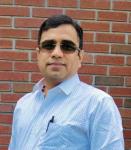
Dr. Jayesh M. Sonawane
Assistant Professor
Ph.D. from Energy Science and Engineering, Indian Institute of Technology Bombay, India and Monash University, Melbourne, Australia. Fulbright Fellow (UMASS, USA) and Shastri Fellow (Toronto University, Canada)
7588711600
Primary research area revolves around the transformative domain of bionanotechnology, with a dedicated focus on integrating diverse disciplines to harness the potential of biological materials at the nanoscale.
• Protein Nanowires: Tailoring protein nanowires using genetically modified E. coli to engineer highly specific clinical and environmental sensors, innovative electronic materials, power generation from ambient humidity, and advanced thin-film electronics. This approach explores the utilization of biological structures for diverse technological applications within the area of nanotechnology.
• Microfluidics Bioelectrochemical Systems: Innovating microfluidic reactors and lab-on-a-chip platforms to investigate whole-cell catalysis, unravel biofilm interactions, and study electroactive biofilms through microscopic methodologies. This research avenue merges microfluidics with electrochemistry and microbiology, unlocking insights into bioelectrochemical processes at a micro and nanoscale level.
• Microbial Fuel Cells: Optimizing microbial fuel cells for multifaceted applications encompassing wastewater treatment, power, and environmental sensing. The focus is on replacing precious metal catalysts and integrating microbial fuel cell technology seamlessly into existing wastewater treatment processes, thereby establishing sustainable and eco-friendly solutions. In essence, my research area in bionanotechnology explores the combination of biological systems at the nanoscale with interdisciplinary fields such as materials science, electrochemistry, microbiology, and microfluidics. The goal is to advance innovative applications and technologies contributing to sustainable, efficient, and advanced solutions
across various domains.
• Teaching Assistant, Indian Institute of Technology Bombay Supported faculty in course management and student engagement for approximately 50 students across the following courses: o EN 652 – Computational Laboratory [Autumn 2014] o EN 604 – Fuel Cells [Spring 2014] o EN 216 – Renewable Energy Technologies [Autumn 2016] o EN 301 – Introduction to Renewable Energy Technologies [Spring 2016]
• Student Supervision Mentored and supervised 10 students (M.Tech., B.Tech., M.Sc., and interns) on technical projects, assisting with project feasibility, technical guidance, and resource availability at the University of Toronto, Canada, and IIT Bombay.
- Fulbright Fellow – Developed Escherichia coli strains for producing protein nanowires, facilitating highthroughput fabrication of biomedical and environmental sensors. Additionally, I am developing a practical-scale Air-Gen system that generates power from humidity using protein nanowires. Department of Microbiology, University of Massachusetts Amherst, United States. (Mar 2022-Mar 2025).
- Post-doctoral Researcher – Investigated live electroactive biofilms in microfluidic bioelectrochemical systems to understand their growth dynamics, interspecies communication, and the effect of electrochemical stimuli on morphology. Department of Chemistry, Laval University, Quebec, Canada. (Sep 2020 – Sep 2022).
- Post-doctoral Researcher – Development of process treatment train for liquid stream using the bioelectrochemical system for “Reinventing the Toilet Challenge” project. Centre for Global Engineering and Department of Chemical Engineering and Applied Chemistry, University of Toronto, Canada. (Oct 2018 to Sep 2020).
- Lead Project Scientist – Development of a pilot-scale bioelectrochemical system for the treatment of formation water at Oil India Limited, Assam, India. Innotech Interventions Pvt. Ltd. (Mar 2018 – Oct 2018).
- International Visiting Research Scholar (IVGS) – Elucidation of electric properties of engineered Escherichia coli with pilA gene from Geobacter sulfurreducens, Department of Chemical Engineering and Applied Chemistry, University of Toronto, Canada. (July 2017 to Feb 2018). 7. Summer School – Singapore Centre of Environmental Life Sciences Engineering (SCELSE), 2015. Study on the frontiers of life sciences that can be applied to an enhanced understanding of the default mode of microbial life in biofilms and to harness such microbial activities to recycle natural resources efficiently. (July 2015 – July 2015). 8. Project Assistant – Department of Energy Science and Engineering, Indian Institute of Technology Bombay, India. “Development and integration of biomass and concentrating photovoltaic system for rural and urban energy bridge: BioCPV” (Aug 2011 – Dec 2012).